
Part 2: Why Fully Decentralized AI Is (Mostly) a Myth
📚 Series Navigation
👉 Part 1: AI, Blockchain, and Cloud: Who Actually Does What?
👉 Part 2: Why Fully Decentralized AI Is (Mostly) a Myth
👉 Part 3: Web3 Data -> Cloud ML Pipelines (Spark in Practice)
👉 Part 4: AI for Blockchain Fraud & Anomaly Detection
👉 Part 5: Smart Contracts + AI Agents: Autonomous Systems
👉 Part 6: Auditable AI: Using Blockchain for Trust & Governance
Why Fully Decentralized AI Is (Mostly) a Myth
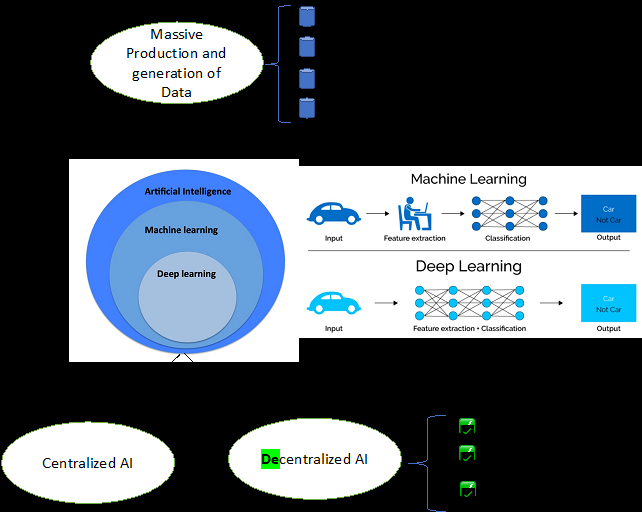
The Promise vs Reality
Decentralized AI promises trustless, censorship-resistant intelligence. The problem is physics and economics, not ideology. At scale, bandwidth, scheduling, and power costs dominate the design.
Hard Constraints Engineers Cannot Ignore
| Constraint | Why It Breaks DeAI |
|---|---|
| GPUs | Scarce, expensive, centralized |
| Latency | On-chain is not real-time |
| Cost | Inference at scale is costly |
| Tooling | ML stacks assume cloud |
These constraints show up immediately once you push beyond toy workloads, especially when you need consistent latency.
The GPU Problem
Training and inference require:
- High-bandwidth memory
- Fast interconnects
- Centralized scheduling
This naturally pushes AI workloads toward cloud hyperscalers.
What Actually Works
- Centralized inference
- Decentralized verification
- Token incentives for contributors
- Cryptographic proofs of output
The pattern is hybrid by design: compute where it is efficient, and verify where it is trust-minimized.
🧩 Case Study: Decentralized Inference Marketplace
A startup attempted token-incentivized GPU nodes. The result was inconsistent uptime, latency spikes, and a centralized fallback for reliability. Incentives helped utilization, but not the tail latency that production systems care about.
✅ Implementation Checklist
- Measure GPU economics
- Compare latency vs block time
- Separate governance decentralization from compute
⚖️ Tradeoffs
| Model | Pros | Cons |
|---|---|---|
| Centralized | Reliable | Trust needed |
| Fully DeAI | Ideologically pure | Unstable |
| Hybrid | Practical | Slightly complex |
Engineering Reality (Solidity)
| |
You do not decentralize GPUs. You decentralize trust in results.
Conclusion
Decentralized AI is not dead, but it will always be hybrid in production.
📚 Further Reading
- ZKML research papers
- Rollup architecture discussions